
How Small Charges Quietly Add Up
There was a time, not that long ago, when buying software meant paying once and owning it indefinitely. That model has largely given way to subscriptions across nearly every category of software, and while the shift made sense from a business standpoint, it’s left a lot of people quietly frustrated by how much of their monthly budget now disappears into a growing pile of small, easy-to-forget recurring charges.
The appeal of subscriptions for software companies is straightforward — predictable, recurring revenue instead of relying entirely on new customers or occasional paid upgrades, which historically made revenue considerably harder to forecast and plan around. From the company’s perspective, this is a genuinely reasonable and defensible business decision that funds ongoing development and support in a sustainable way.
From the user’s perspective, though, subscriptions have a way of quietly accumulating in a manner that one-time purchases never did. A five-dollar monthly charge here, an eight-dollar one there, feels individually trivial at the moment of signing up, but a person using a handful of different subscription tools can easily find themselves paying well over a hundred dollars a month once everything is added together, often without ever consciously deciding to spend that much on software in total.
This gradual accumulation is made worse by how easy it is to forget about subscriptions once they’re set up. Many people continue paying for tools they used heavily for a month or two and then largely abandoned, simply because canceling requires a deliberate, slightly annoying action, while the charge itself continues automatically and invisibly in the background without requiring any action at all to keep going.
Why Subscriptions Took Over Software
Some companies have leaned into this friction more aggressively than others, deliberately making cancellation harder to find or requiring a phone call rather than a simple button, banking on the fact that a meaningful percentage of subscribers simply won’t follow through with actually canceling once inertia sets in. This practice has drawn increasing criticism and, in some regions, growing regulatory attention specifically targeting deceptive cancellation processes.
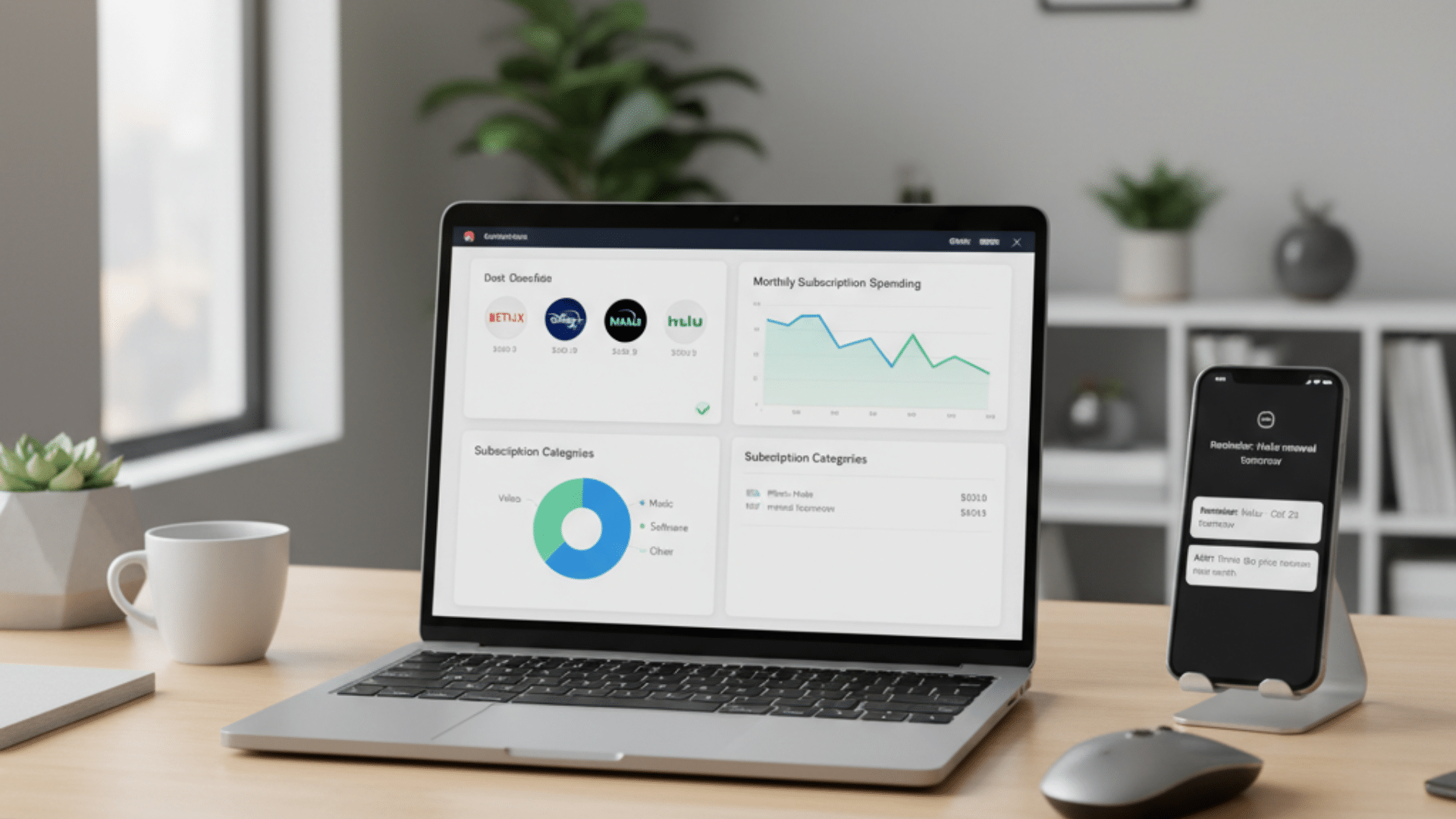
A useful, low-effort habit is doing a periodic audit of every active subscription — software and otherwise — checking what you’re actually still using regularly versus what’s quietly renewing out of habit. It’s rarely a dramatic revelation, but it’s a genuinely common one: most people who do this exercise find at least one or two subscriptions they’d completely forgotten they were still paying for, sometimes for tools they haven’t opened in over a year.
It’s worth examining the psychological framing that makes subscriptions feel less costly than they actually are, since this is a deliberate and well-understood pattern in how these products get priced and presented. Breaking a cost down into a small monthly figure rather than an annual or lifetime total makes the actual financial commitment feel considerably smaller than it really is, and companies are well aware that ‘just eight dollars a month’ registers very differently in a customer’s mind than the equivalent hundred-dollar annual total it actually adds up to over the course of a year.
Bundling has emerged as one response to subscription fatigue, with some companies now offering a single combined subscription covering multiple related tools rather than requiring several separate individual payments. This can genuinely offer real savings for people who were already paying for each individual piece separately, though it’s worth being cautious of bundles that include several tools you don’t actually need, since the appealing framing of an all-in-one discount doesn’t necessarily mean the total is still cheaper than simply paying for the two or three specific tools you’d genuinely use on their own.
Taking Back Control of Your Costs
Family and shared subscription plans represent a genuinely useful, underused strategy for reducing overall subscription costs, though they require a bit of coordination that many people simply never get around to setting up in practice. Splitting the cost of a shared plan among several household members or close friends, where the service’s terms genuinely allow it, can meaningfully reduce the individual cost, though it’s worth checking a service’s specific terms to avoid violating usage policies that some providers do actually monitor and enforce.
The broader shift toward subscription-based software isn’t likely to reverse at this point, given how much more predictable and sustainable it’s proven for the companies building these tools. But building a deliberate, periodic review habit — genuinely checking what you’re paying for against what you’re actually still using every few months — remains the most reliable individual defense against this gradual, easy-to-overlook accumulation, regardless of which specific direction the broader industry trend continues moving in over the coming years.
The specific companies and pricing models will keep shifting over the coming years, but the underlying discipline that actually protects your budget stays consistent regardless: know what you’re paying for, check in on it periodically, and don’t let convenience at the moment of signing up quietly turn into years of unexamined, accumulating recurring cost.
It’s also worth simply asking, before signing up for any new subscription, whether a one-time purchase alternative exists that could reasonably serve the same purpose. Not every tool needs to be a recurring subscription, and a bit of searching sometimes turns up a perfectly capable one-time-purchase option that quietly avoids adding yet another small monthly charge to an already growing pile of them.
Before signing up for anything new, it’s worth asking whether a one-time-purchase alternative exists — not every tool needs to become another small monthly charge on a growing list.